
29 Aug Sober Mixology: When the Drink Matters More Than the Alcohol
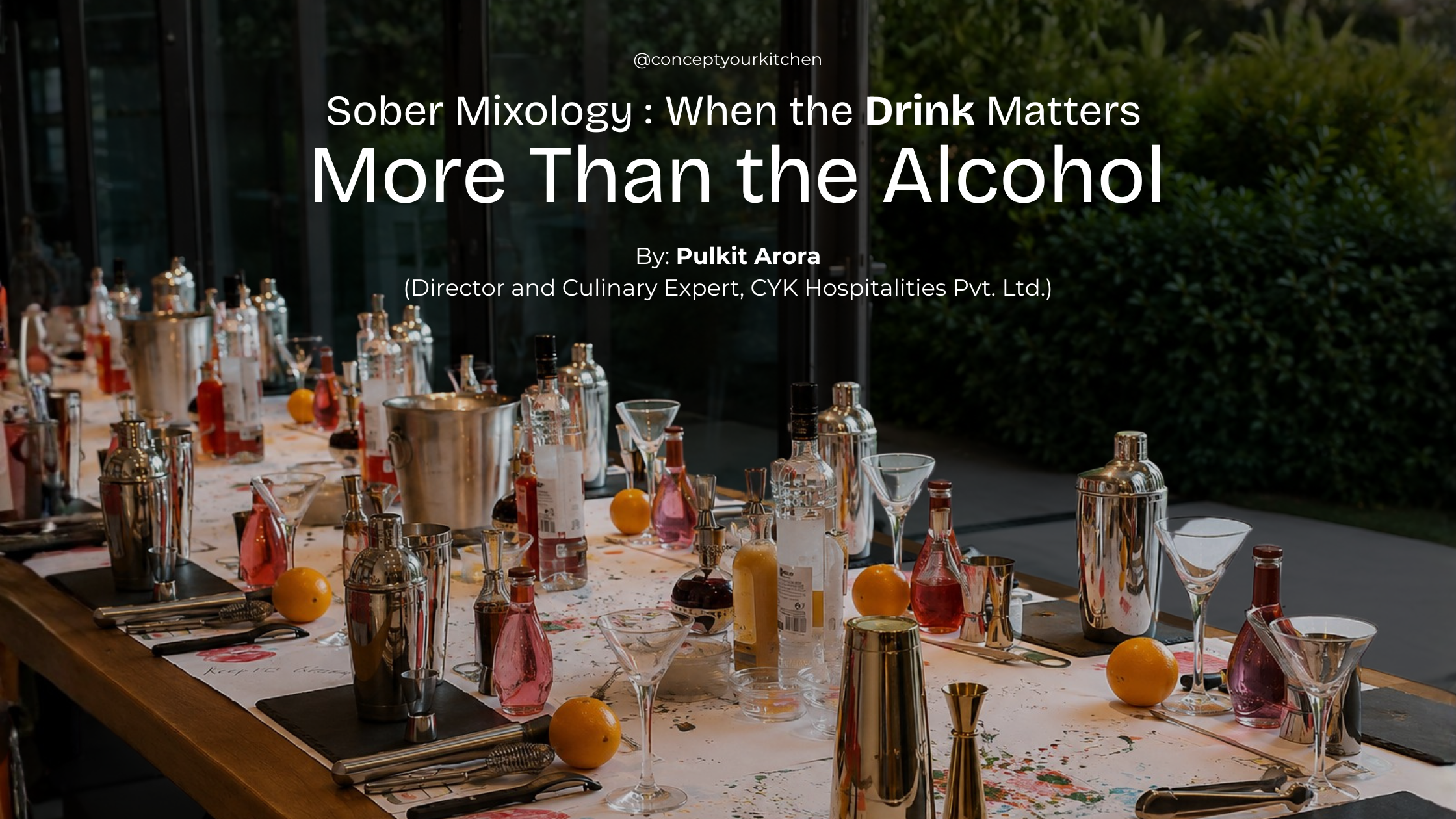
For decades, the language of the bar has been built almost entirely around spirits. Whisky, gin, rum, vodka, tequila: these became the foundation bartenders used to create aroma, bitterness, body, theatre and storytelling.
But something interesting is starting to shift.
More guests today are questioning whether a great evening actually needs alcohol in it. They still want the ritual of ordering a drink. They still want the sophistication of the glass, the back-and-forth with the bartender, the pleasure of tasting something new. What they don’t always want is to get intoxicated.
That’s the gap where sober mixology gets interesting, and where it stops being just a fancier word for “mocktail.” Unlike a traditional mocktail, a sober mixology drink isn’t built by subtracting alcohol from a familiar recipe; it’s built from scratch, the way a bartender would build a cocktail, using its own logic of flavour, texture and craft.
What Is Sober Mixology? Starting From a Blank Glass, Not a Substitution
At CYK, we’ve started exploring this space with a fairly simple thought experiment. Instead of asking “What can replace alcohol?” (which is really just a subtraction problem), we asked a different question: “What can create an exceptional drinking experience, starting from nothing?”
That reframe opens up a much bigger ingredient palette than people expect.
- Coffee brings roast, aroma, bitterness, depth.
- Tea brings tannins, fragrance, structure.
- Matcha brings body and earthiness.
- Cacao brings richness.
- Spices, herbs, citrus, fruits and botanicals bring heat, freshness, complexity.
None of these need alcohol to justify their place in a glass. They were never supporting characters to begin with.
India’s Ingredient Advantage: Indian Ingredients for Non-Alcoholic Cocktails
This is a space where India arguably has a head start most bars haven’t noticed yet. We already have an extraordinary bench of ingredients for botanical mixology: speciality teas and coffees, kokum, jamun, raw mango, tamarind, kahwa, vetiver, Gondhoraj lime, cardamom, saffron, pepper, and dozens of regional ingredients that show up constantly in Indian kitchens but rarely get the same creative attention behind the bar.
The kitchen has been doing sophisticated things with these ingredients for generations. The bar hasn’t caught up, and that’s exactly the gap India’s growing non-alcoholic beverage market is starting to fill, as more brands move beyond sugary soft drinks into botanically brewed, zero-proof drinks that carry real flavour complexity.
Not an Alcohol-Free Copy: Its Own Identity
The real opportunity here isn’t building alcohol-free versions of existing cocktails. That’s still thinking in terms of substitution, same drink, minus one ingredient.
The bigger opportunity is building drinks that stand on their own, with their own identity, their own logic, their own reason to exist.
Because here’s the thing: a guest who chooses not to drink shouldn’t feel like they’ve opted into a lesser experience. If one person at the table is enjoying a beautifully crafted cocktail, the person next to them should be able to enjoy an equally sophisticated tea-, coffee-, matcha, or botanical-led drink.
There’s a Commercial Story Here Too
Consumers already understand, from coffee, if nothing else, that a beverage’s value isn’t just the sum of its raw ingredient cost. A cup of coffee can be a two-minute everyday habit, or it can be a carefully sourced, precisely prepared experience worth pausing for. Origin, technique, presentation, knowledge, storytelling: that’s where the value actually comes from.
Sober beverages can follow the same arc. A well-built sober drink should make a guest pause, taste it again, and ask, “Wait, what’s in this?”
That moment of curiosity is where the category starts to earn its price point. It also signals where the market is headed. India’s non-alcoholic beverage industry is on a steep growth curve, and the winners in that curve will be the ones treating flavour and craft as seriously as any spirits-led menu.
What CYK Is Building: Our Sober Mixology Program
Through the CYK Sober Mixology Program, we’re exploring coffee, tea, matcha, cacao, Indian ingredients, botanicals and other non-alcoholic flavour systems, but through the lens of professional beverage development, not as an afterthought on the menu. A great example of our expertise is our latest project: a new brand by legacy brand Frontier Biscuits – Fronbis.
To be clear, this isn’t an anti-alcohol conversation. Bars will keep pouring spirits. People will keep celebrating the way they always have. This is a pro-choice, pro-creativity conversation: an argument that hospitality has room to make the other choice just as exciting.
Because maybe the future of mixology isn’t about taking alcohol out of the glass.
Maybe it’s about discovering how much more we can put into it.
No Comments