


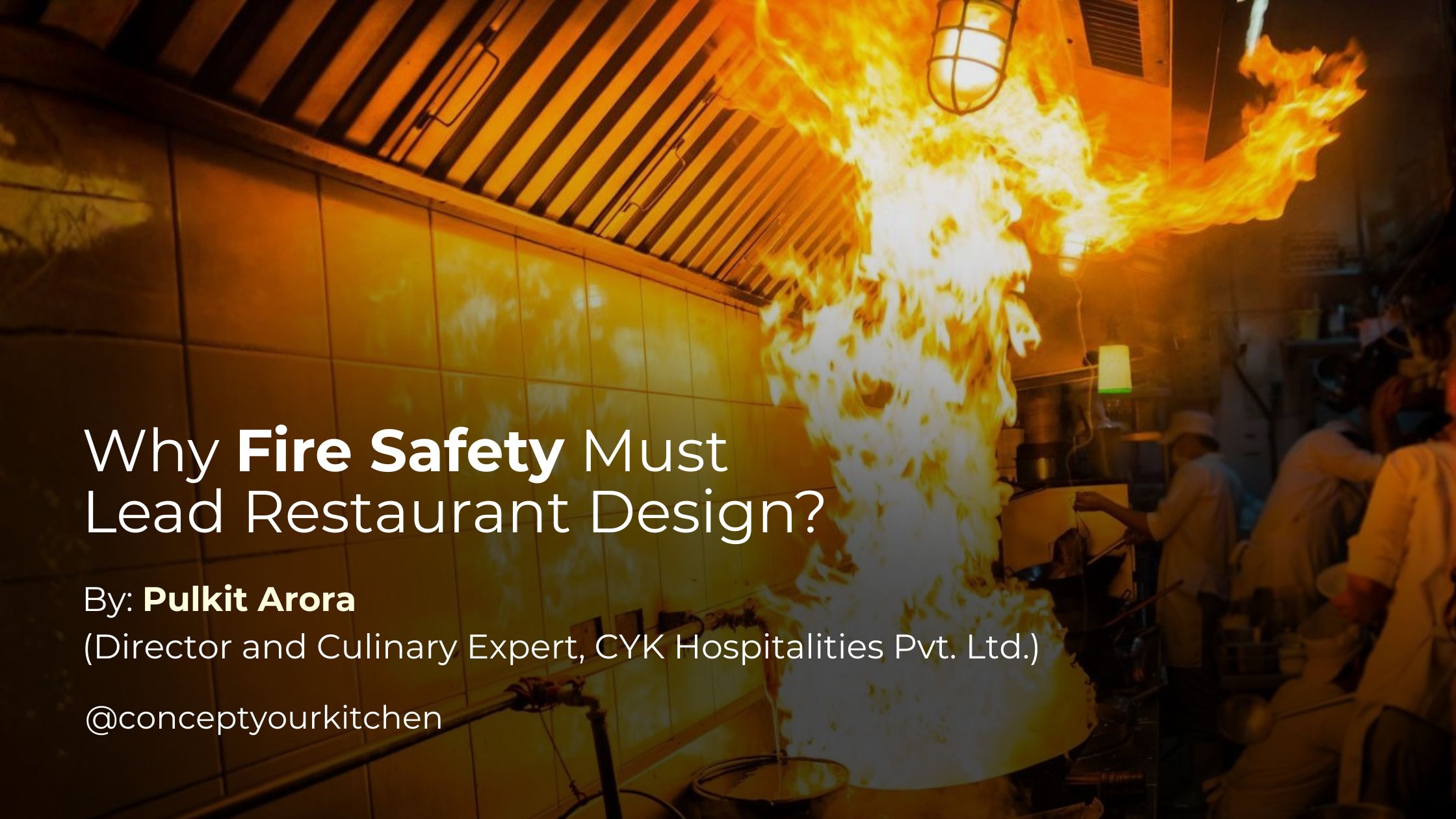
09 Dec Why Fire Safety Must Lead Restaurant Design?
In the restaurant industry, design, functionality, and safety must move together. Yet fire-resistant materials are still treated as a secondary consideration during execution. Kitchens operate with open flames, overheated equipment, electrical overload, grease-laden ducts, and constant movement of people. In such an environment, fire safety is not a luxury; it is a responsibility.
Forty years ago, people had nearly 17 minutes to escape a fire. Today, that time has dropped to just three. Modern interiors rely heavily on synthetic materials, petroleum-based furniture, fabrics, laminates, and fast-burning décor. These ignite faster, burn hotter, and release deadly toxic smoke within seconds. In a restaurant, where heat and fuel already coexist, this danger multiplies exponentially.
1. Safety First—Always
Fire-resistant materials slow the spread of flames and toxic smoke, giving guests and staff precious extra time to evacuate. In most fire fatalities today, smoke inhalation, not burns, is the cause of death. That time delay created by fire-rated walls, ceilings, ducts, and electrical systems is often the thin line between survival and disaster.
2. Brand & Financial Protection
A single fire incident can shut down operations permanently, trigger insurance rejections, create legal exposure, and erase years of brand-building within minutes. Fire-rated zoning ensures damage is contained to one section instead of destroying the entire outlet, protecting both revenue continuity and business reputation.
3. Compliance Without Delay
Fire NOCs, exhaust duct ratings, electrical load permissions, suppression systems, and emergency exits are now strictly enforced by malls and municipal bodies. Projects that integrate fire-resistant materials from the design stage avoid rejection, rework, and delayed openings—saving both time and capital.
4. Smarter Long-Term Economics
While fire-resistant materials appear expensive upfront, they reduce maintenance cycles, insurance premiums, renovation frequency, heat damage, and liability risks. Over the life of the outlet, fire-safe interiors are actually more cost-efficient.
Fire-resistant materials must be thoughtfully integrated across kitchens, exhaust systems, electrical lines, woodwork, furniture, ceilings, gas pipelines, and exit zones. But materials alone are not enough. Designers and owners must align. A visually stunning restaurant without safety becomes a liability, while a low-cost build without protection becomes a ticking risk.
Safety Is the New Design Language
The restaurant industry is moving faster than ever, but safety can never be rushed or compromised. With today’s fires spreading faster, burning hotter, and turning toxic within minutes, fire-resistant materials are no longer optional upgrades. They are the foundation of responsible restaurant execution.
A fire-safe restaurant is not just well-designed.
It is responsibly built.
About the Author
This article is written by Pulkit Arora, Director and Culinary Expert at CYK Hospitalities, a leading F&B consultancy firm in India. CYK Hospitalities specializes in restaurant consultancy, menu engineering, brand expansion, and more, helping businesses create authentic, innovative, and memorable dining experiences. With extensive experience in the industry.
No Comments